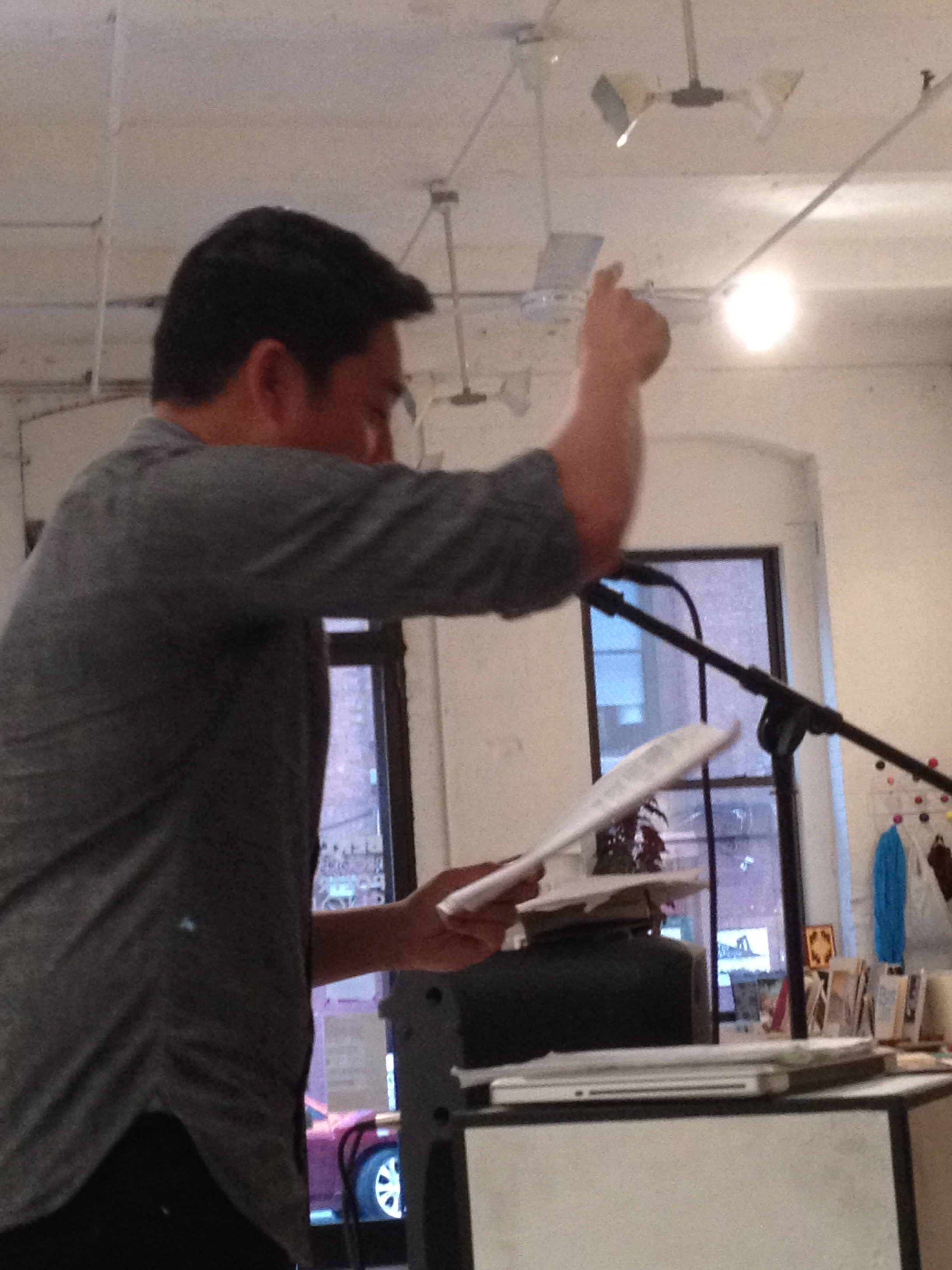
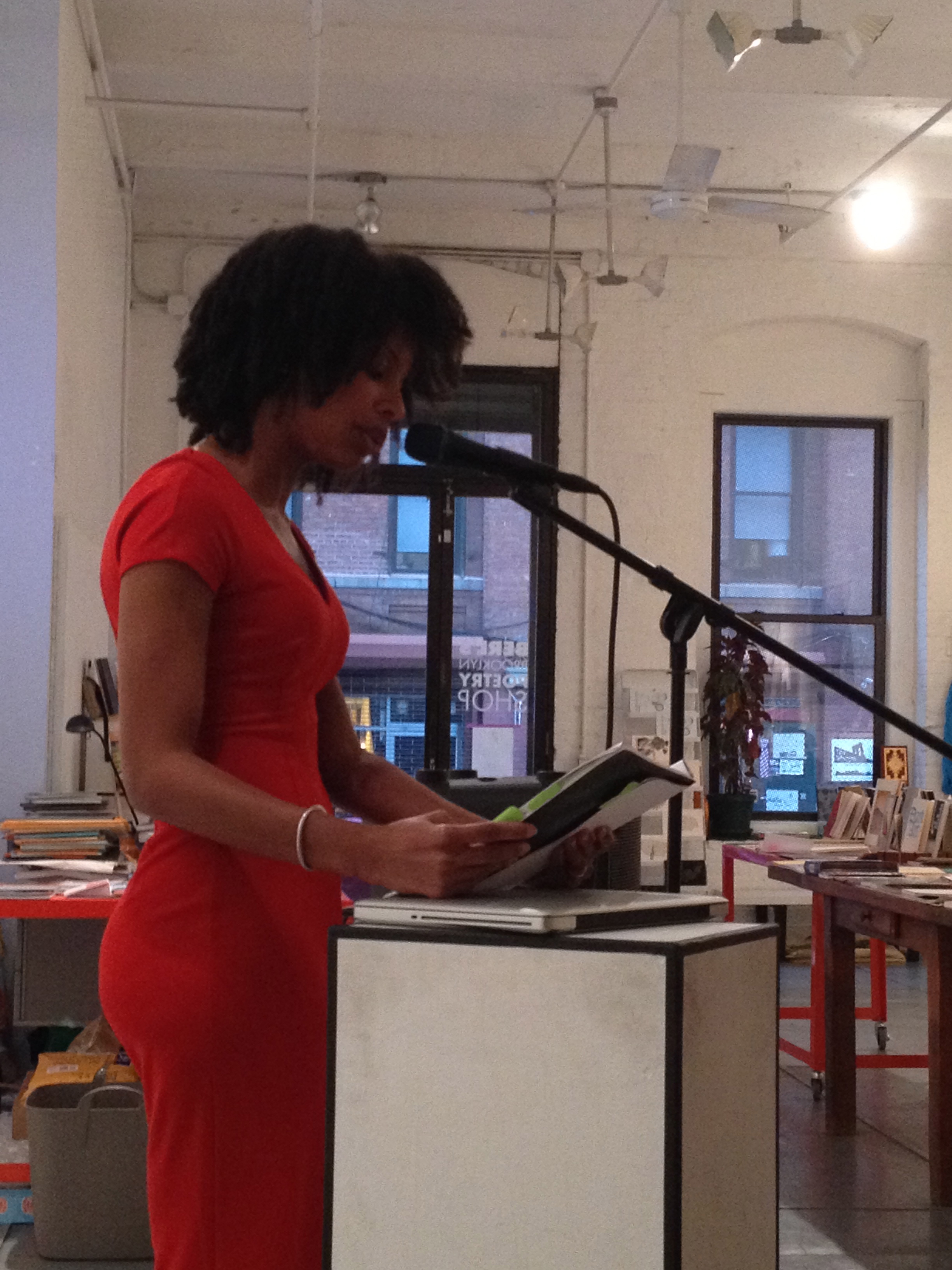
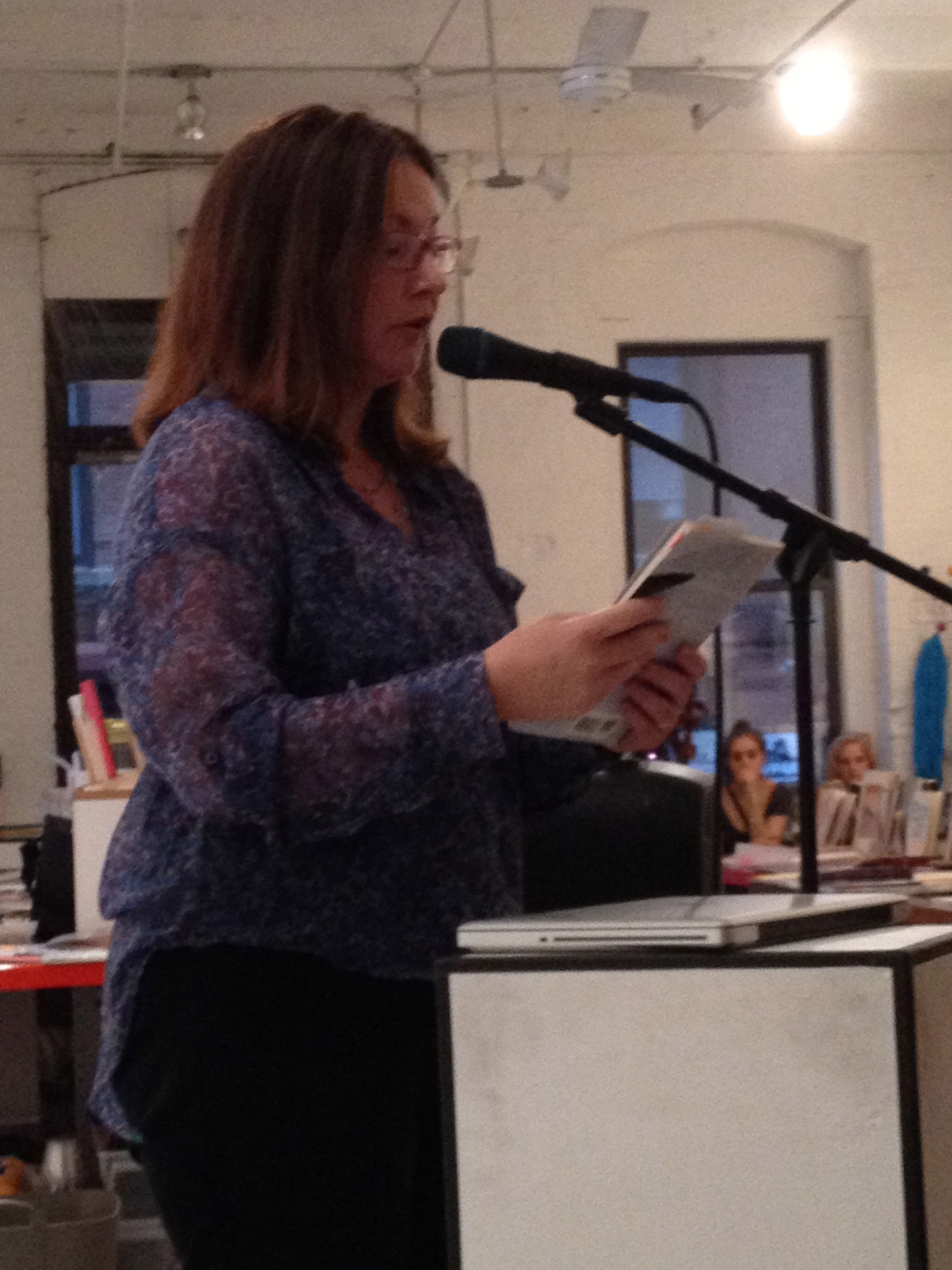
Sarabande Press presents Jeff Dolven, Kathleen Ossip, Thomas Heise


(Tech issue - audio cut off halfway through reading)

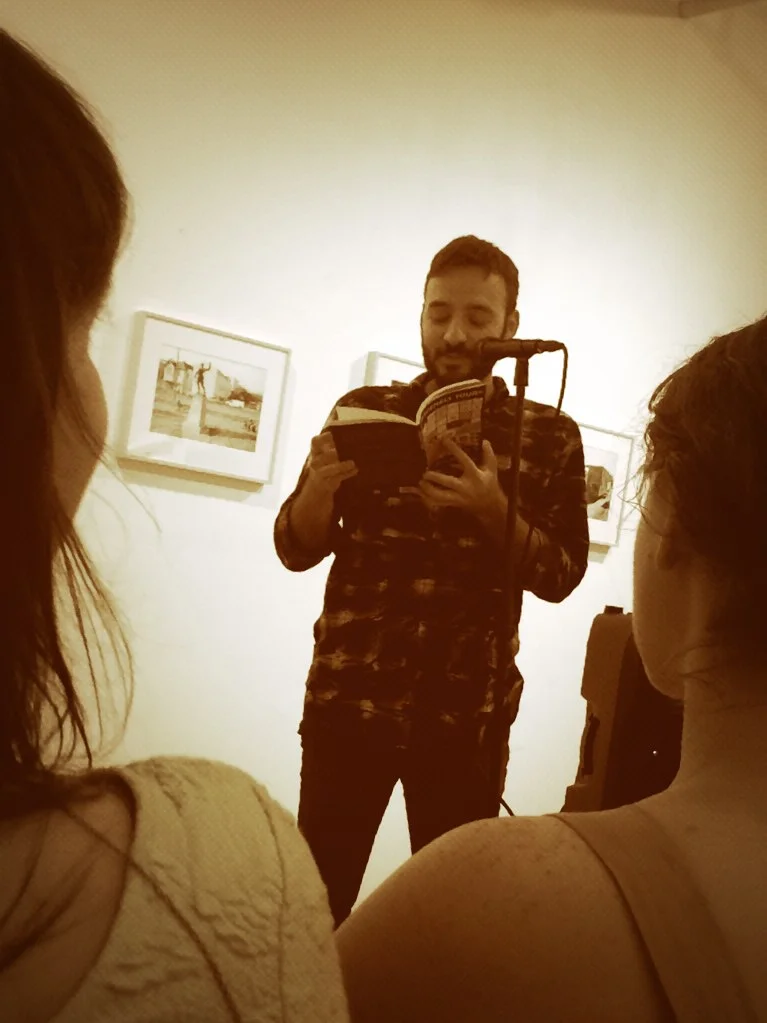


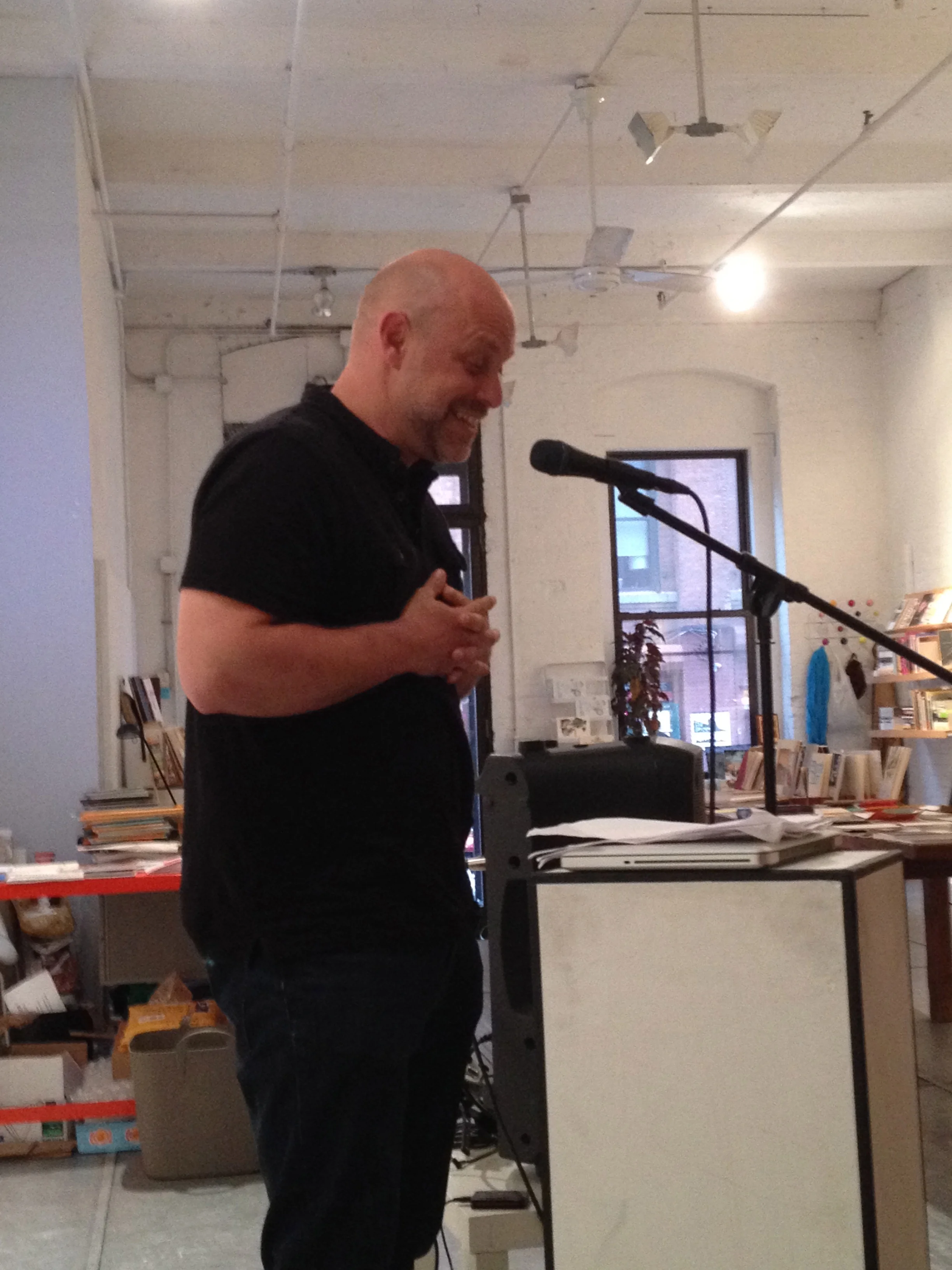
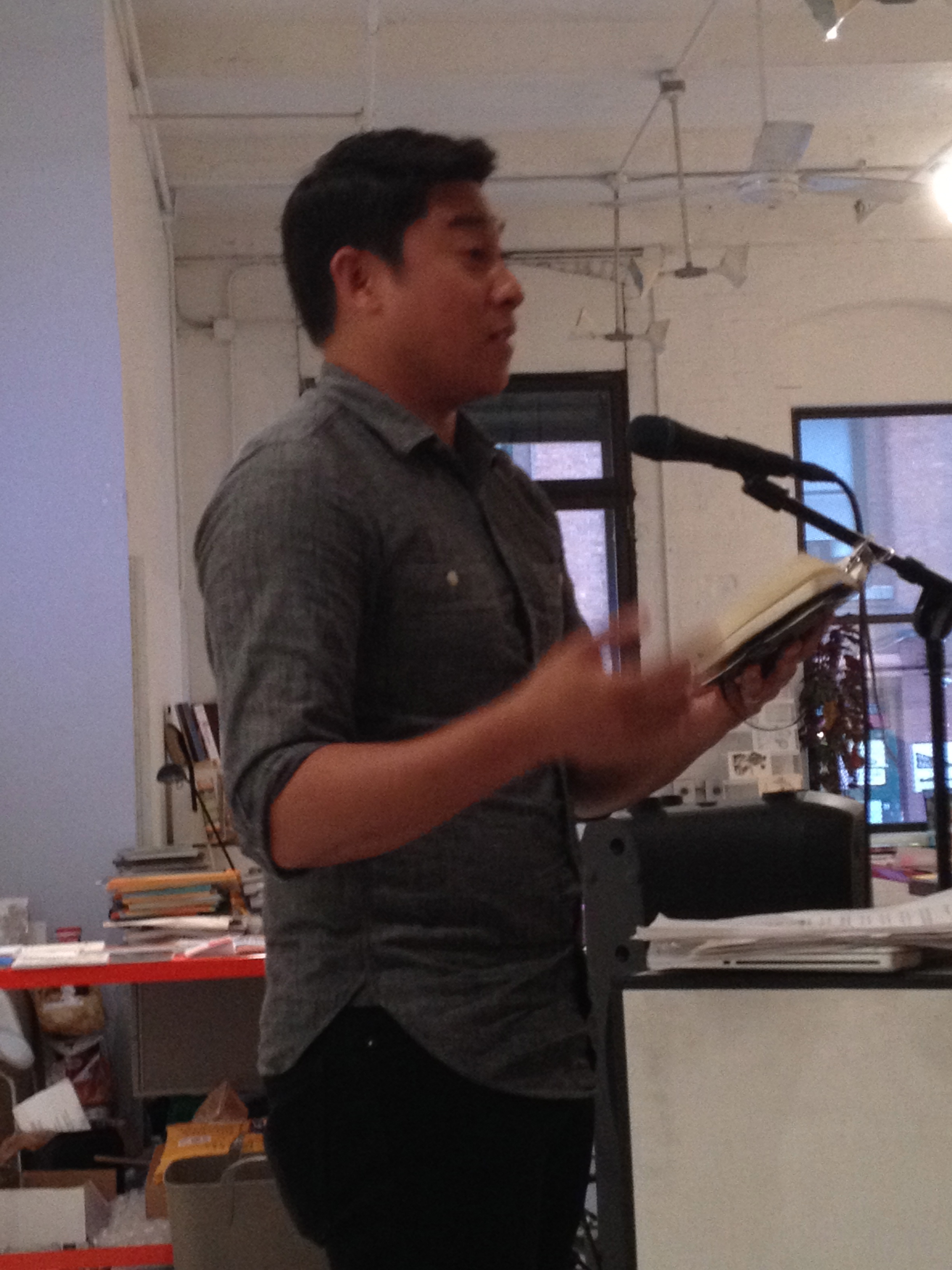

Here are Farrah's introductory notes on the poets:
Myth
Why write about myth? Because it’s bigger than you are, feels set, and what writer wouldn’t want to try to tweak it, to offer his or her experience or interpretation of mythical characters and creatures? It’s like joining a community, an ancient discussion. One of our poets tonight John Ebersole has a line about anonymity and fame and here is the crux regarding myths. The crux is the ars poetica, writing about myth, dealing with myth, that these four poets tonight John Ebersole, RA Villanueva, Nicole Sealey, and Megan Sexton ask what is mine, what is my place, what am I up against.
John Ebersole:
John Ebersole is no grocery store poet. His interest in the violence of writing and the violence of reading. Challenge, risk.
He says on the coercive poetry of accessibility:
“Behind the congenial veil of hospitability, I sense a gang of fanged demons brandishing whips.”
“my poetry needs to brawl”
Jared attended workshop with him he remember John’s awe—how did he do that? As if watching acrobats, feats of human strength.
Melodrama surges in his work. Self flagellation? a la chris burden shot in arm
“When I was born a poisonous gas was released from a glasstube”
“If I am caught claiming I am going to explore the possibility between memory & the present, beat me mercilessly with a curtainrod & throw us together in a dumpster in Orlando.”
“I yearn for anonymity & fame at the same time.”
R.A. Villanueva:
loosens the boundaries between history and memory, time
“years later/ you find yourself home, on the edge/ of a Greater Bangkok throttled/ with fires and protest tambourines.”
a current of voices, ceremony, a catholicism, sacrifice
“Each of us raised by a family of ghosts/ and masks and talking gods”
His poems sit in the places where people have been historically
even while positioning his subject matter in the present day they still seem as though they are from an unrecognized past
“of this flailing, flaring New Jersey sunset of the burnt-ends of cigarettes as they and gravity then the river kiss Red’s surge toward night-fall”
He’s the kind of poet who makes you wonder, what have you been reading? And what are you going to do next?
Nicole Sealey:
“if a few are familiar with the myth of you”
Myths, archetypes, a kind of classification that doesn’t always want to be named but is kind of named
Sealey often investigates certain subject matter such as Dorian Corey, Sisyphus, grief, Brad Pitt, Clue…
and the objects and films that come into contact with these subjects
as well as the unspoken space of people and animals who straddle more than one culture—object & story, self & myth, man as woman,
“What I want to be, I be—crew-cut queen,/ superman, mother and son, or become.”
She explores the powerful and vulnerable nature of self-mythology
“even the gods have gods”
who tells the stories who are the gods is the writer god-like
“How do we/ author our gentle birth, the height/ we were—were we gods rolling stars across/ a sundog sky, the same as scarabs?”
Megan Marie Sexton:
by Mercer University Press
Swift Hour opens with an epigraph from a leonard Cohen song, “I hope you’re keeping some kind of record.”
Like Cohen, Sexton is looking for the crack in everything that lets the light in, but even more urgent is the recording of these moments. Life is quickly passing, but along the way, relics are harvested for safekeeping. Sexton is a poet in search of shadows as well as light. Her explorations range from the grieving mothers of the Disappeared of Argentina, the censorship of Anna Akmatova, to Ghandi’s ashes being scattered into the Ganges. With surrealist twists, her poems capture how incongruous images of memory can redeem the pain of our past. Sexton’s poems of marriage and motherhood explore the mythical possibilities of relationships—her daughter conjures Persephone in the grocery aisle and a man and woman on a Greyhound bus suddenly become Orpheus and eurydice. Her work reminds us how in some ways myth and knowledge itself help us to navigate through the shadows toward the light.


Introductory notes by Jared:
Begin with a poem by Gerard Manley Hopkins:
EARNEST, earthless, equal, attuneable, | vaulty, voluminous, . . stupendous
Evening strains to be time's vast, | womb-of-all, home-of-all, hearse-of-all night.
Her fond yellow hornlight wound to the west, | her wild hollow hoarlight hung to the height
Waste; her earliest stars, earl-stars, | stars principal, overbend us,
Fire-featuring heaven. For earth | her being has unbound, her dapple is at an end, as-
tray or aswarm, all throughther, in throngs; | self in self steeped and pashed--quite
Disremembering, dismembering | all now. Heart, you round me right
With: Our evening is over us; our night | whelms, whelms, and will end us.
Only the beak-leaved boughs dragonish | damask the tool-smooth bleak light; black,
Ever so black on it. Our tale, our oracle! | Let life, waned, ah let life wind
Off her once skeined stained veined variety | upon, all on two spools; part, pen, pack
Now her all in two flocks, two folds--black, white; | right, wrong; reckon but, reck but, mind
But these two; ware of a world where but these | two tell, each off the other; of a rack
Where, selfwrung, selfstrung, sheathe-and shelterless, | thoughts against thoughts in groans grind.
`
I was inspired since Myriam Moscona (translated by Jen Hofer) quotes this poem ‘spelt from sibyl’s leaves” in an epigraph .
I thought it would be interesting to read this apocalyptic vision before presenting these three poets, all of whom seem to me in a notable way to in an oracular way to be writing a poetry of the future –at least exploring a future I hope for even if in some ways it is a dream and in other ways it is already here: hybrid, polylingual. This future poetry is a poetry of translation and, equally powerfully, leaving things untranslated (untranslation?), a poetry of zones -- “documentary zones” and “contact zones” are some zones that Jill offers in SLOT for instance , and a poetry that is not limited to language: a poetry of image, a poetry of living the world, a skeptical and wounded poetry, a poetry of love.. Something hovering between memorial and dismemberment.
Thrilled to have Jill all the way from abu dhabi. moves through intellect to a kind of mystical space of curiosity,
Jill Magi’s poetry operates as a kind of language architecture. Her words are things, bodies, envelopes She reminds us that the tiniest element of a place can change you.
“create a grid – one axis is sentimental the other is real . Chart a worker hero from the archive. This is a portrait. the reader may locate herself
FROM SLOT
"More than a structure, what do you feel? More than a sentence."
Gathered together her poems are a library of how to be what to do
"If alone, I am even more softened, emptied out, a little lonely, and this feeling makes my desire to learn more intense."
One of my favorite gestures in SLOT are the occasional page devoted to reading list – like a bibliographic appendix scattered into the middle of the text, a gesture of laying her cards on the table, a personal scholarship, quasi-autobiography through sources. I love the juxtaposition of “REGARDING THE PAIN OF OTHERS” and LONELY PLANET USA” – this could be reading list, bookshelf transcription, a bitter quip, . is this a note of tragic solipsism, or is it hopeful?
Then everything is touched by names, everything is touched by engrave, everything is touched with scar, art, touched with slavery…touched down by disaster, iron, translation on display. The everything touched by reasonable, touched with the lure of words.”
Jen Hofer is also interested in naming and what has to be named “law of supply and supply” she writes, and “to drone is to name and ignore”. So we have a poetry of the drone on one hand and on the other and a poetry exploring justice, caring, community
Deep hopefulness in her vision of translation as an expression that is:
Porously self-reflexive, self0-expansive, self-effacing, and a direct manifestation of an impulse toward solidarity=
I see the materials of her collages – the Cartesian graph the handsewn stitch, as a gesture of recuperation. Hofer writes of “a little female library” and I think there’s something in this idea of a gendered archive celebrating its littleness, its stance against from a maximalist collection that would contain everything. She uses newsprint- and news is of course an originator of the whole idea of ideas as content filling the rectangular space between the ads… She writes about drones and I see the same kind of recoiling from the inhuman. “What is it to be a person’ her poem poses explicitly against drone surveillance and violence.
I love in her notes to Moscona she writes about ‘writing backwards”, quoting James Copeland “Danger written backwards does nots pell undanger”
How are poets to proceed? “we simply proceed. We proceed complexly.There is no other viable option and within the concept of proceeding there are many many viable options…
The future is positive but not progressive in a ‘ brutally inhuman’ way that merges differences.
The power of a question:
Question shall I listen am I near may I stop listening shall I listen”
Paolo Javier’s poetry is also rooted in questions of language that are questions of self-definition. His poems are windows into polylingual consciousness.
Tiraan mo nitong dura kong sinilbeng A,
a projectile question desires a career.
Apaloosa, Apaloosa B. Infinity’s escape.
“mo nitong = I spit like this”
dense, political, engaged poems that are love poems rooted in difference. Identity is always at stake. Channeling the otherness of English. I was reading about the distinction between englog (English grammar) and taglish (english words in tagalog) and I think it’s partly these sorts of linguistic questions that animate what Paolo does.
intense linguistic energy. At times as if he’s trying to bring across the active-passive qualities of tagalog into English.
Jill said something wonderful re Paolo, using helene cixous as a way of understanding his interweaving of love poem and the postcolonial:
the ultimate “other” is the beloved, with whom we are endlessly fascinated, and with whom we want to merge, to know and be known by.
Further dislocation in language.
senility sinabi abalone all ensues Valhalla
Every language is a foreign language and every foreign language can be learned:
why did i always
use the wrong words
should be other words
that are more suitable
This event was organized by Michael Klein and the readers in a celebratory spirit, not as an official Lambda-sponsored event.
also featuring video poetry by Sophia Le Fraga...


